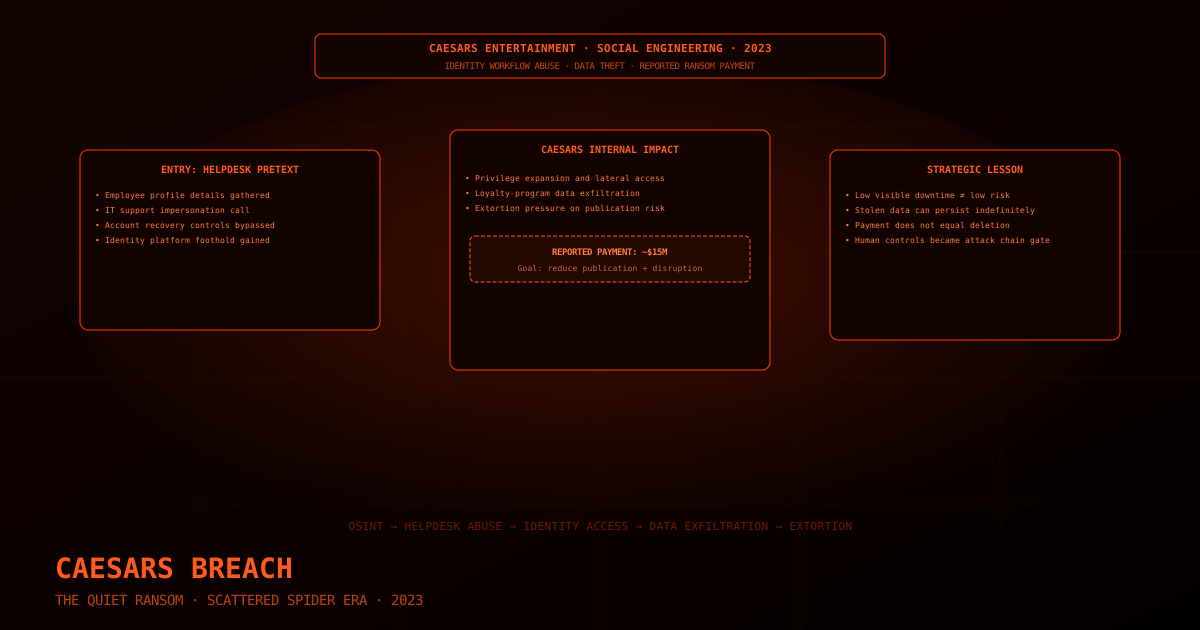
The Quiet Ransom: Caesars Entertainment and the Scattered Spider Breach
The Quiet Ransom: Caesars Entertainment and the Scattered Spider Breach
In September 2023, Caesars Entertainment disclosed that attackers had accessed systems tied to its loyalty program.
The core intrusion pattern matched what would soon become infamous at MGM: identity-first compromise, not exotic malware at entry.
The Entry Path
Public reporting and regulatory disclosures pointed to social engineering of IT support workflows.
That pattern matters because it bypasses the assumptions many security programs still prioritize:
- The perimeter can be hardened
- Endpoints can be monitored
- MFA can be deployed
But if helpdesk identity-verification controls are weak, an attacker can reset access instead of cracking it.
Why Caesars Looked Different from MGM
Caesars and MGM were both linked to similar threat-actor tradecraft in the same period.
Yet outcomes looked very different to the public:
- MGM: visible operational disruption for days
- Caesars: far less public service impact
A key reported difference was ransom strategy. Caesars reportedly paid approximately $15 million after an initial larger demand, aiming to prevent wider publication of stolen data.
What Was at Risk
Disclosures indicated theft of personal data associated with Caesars loyalty-program members, including identity attributes used for fraud and account targeting.
Even when operations stay online, this is still a high-impact breach class:
- Long-tail phishing and impersonation risk
- Account takeover pressure across reused credentials
- Persistent customer trust damage
Legacy
Caesars became a case study in a hard operational question:
Is the objective to avoid downtime, avoid disclosure, or avoid future targeting?
Paying can reduce immediate business shock, but it does not guarantee deletion, non-resale, or non-reuse of stolen data.
The durable fix is process hardening at the human control points attackers exploit first.
Attack Chain: Caesars Entertainment 2023
graph TD
    A["OSINT Recon\nEmployee details harvested\nfrom public sources"] --> B["Helpdesk Social Engineering\nAttacker impersonates employee\nrequests credential/MFA reset"]
    B --> C["Identity Control Bypass\nAccount recovery workflow grants\nhigh-value access"]
    C --> D["Privilege Expansion\nAdditional accounts and systems\nmapped and accessed"]
    D --> E["Data Exfiltration\nLoyalty-program related\npersonal data removed"]
    E --> F["Ransom Demand\nPayment pressure tied to\npublication threat"]
    F --> G["Reported Payment\n~$15M to limit release\nand reduce disruption"]
    G --> H["Disclosure + Cleanup\nRegulatory filings,\ncontainment, control hardening"]

    style A fill:#1a1a2e,color:#e0e0e0
    style C fill:#0d3b66,color:#a9d6ff
    style E fill:#c0392b,color:#fff
    style G fill:#8e44ad,color:#fff
    style H fill:#2c3e50,color:#e0e0e0
// Further Reading & Media
Caesars Entertainment and the Scattered Spider Breach
How a helpdesk social-engineering intrusion hit Caesars weeks before MGM, leading to a fast ransom payment, limited visible downtime, and a lasting debate over whether paying buys safety or just silence. Use this reference overview as a jumping-off point for deeper reporting, primary-source disclosures, and historical context.
→ View Resource