Trusting the Support Channel: The Okta Support System Breach
Trusting the Support Channel: The Okta Support System Breach
In late 2023, Okta disclosed a breach involving its support system.
The immediate technical detail sounded narrow: a compromised support environment and stolen files uploaded by customers for troubleshooting.
The strategic implication was not narrow at all.
Why HAR Files Became High-Risk
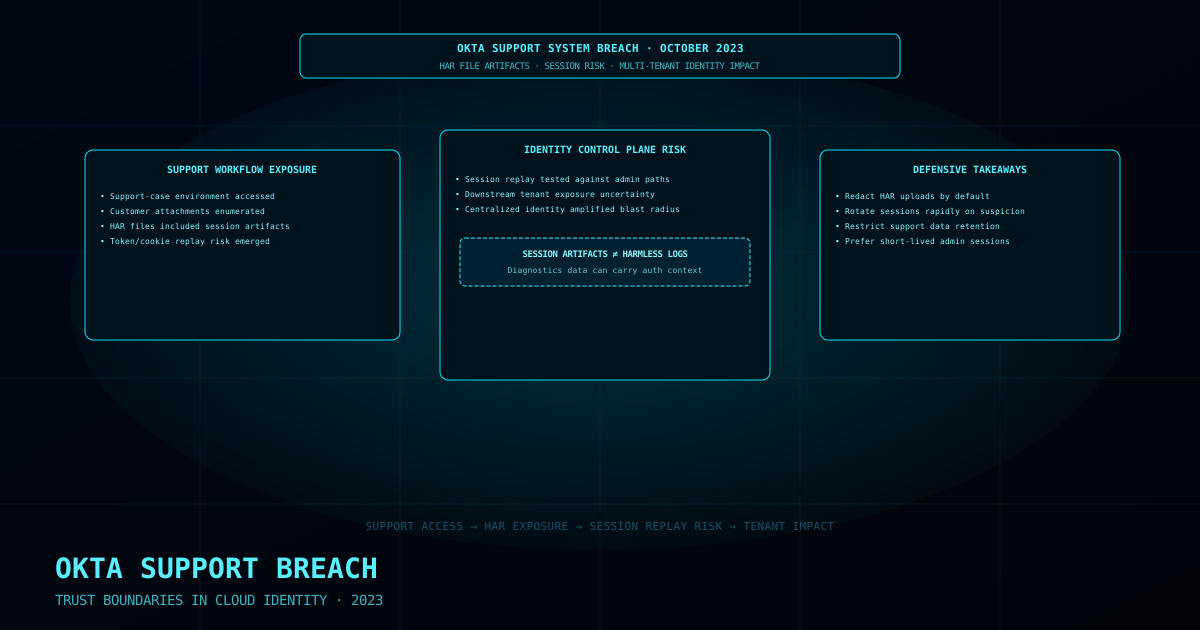
Some affected support cases included HAR (HTTP Archive) files, which can capture cookies, tokens, and other session artifacts if not sanitized.
For identity providers, that creates a dangerous chain:
- Support workflow data contains authentication context
- Authentication context can enable session replay
- Session replay can bypass password reset urgency
The issue was less about one software bug and more about operational trust boundaries.
Identity Platforms as Concentration Points
Okta sits in front of many downstream business systems.
So when attackers gain material that can help impersonate an authenticated session, one compromised support channel can become a multi-tenant risk multiplier.
This is the same structural pattern seen in many modern incidents:
the control plane is high leverage, and adjacent systems around it inherit that leverage.
Defensive Lessons
The incident reinforced practical controls:
- Minimize sensitive session artifacts in support uploads
- Redact HAR files before transfer
- Rotate sessions/tokens quickly when exposure is suspected
- Enforce short-lived session designs and strong re-authentication
Legacy
The breach forced a broader conversation about cloud identity operations:
Secure authentication is not only about login screens.
It is also about every human and technical workflow around support, diagnostics, and exception handling.
Attack Chain: Okta Support System Breach
graph TD
    A["Initial Compromise\nAttackers access support\ncase-management environment"] --> B["Case Data Access\nSupport attachments and\nmetadata enumerated"]
    B --> C["HAR Artifact Collection\nUploaded troubleshooting files\ncontaining session material"]
    C --> D["Session Replay Attempts\nTokens/cookies tested against\ncustomer admin contexts"]
    D --> E["Potential Tenant Impact\nDownstream enterprise access\nrisk across affected customers"]
    E --> F["Incident Disclosure\nCustomer notifications and\nscope updates published"]
    F --> G["Control Hardening\nSupport workflow restrictions,\nartifact handling improvements"]

    style A fill:#1a1a2e,color:#e0e0e0
    style C fill:#c0392b,color:#fff
    style D fill:#8e44ad,color:#fff
    style E fill:#0d3b66,color:#a9d6ff
    style G fill:#2c3e50,color:#e0e0e0
// Further Reading & Media
The Okta Support System Breach
How a compromise of Okta's support environment and uploaded HAR files exposed session artifacts, creating downstream risk for enterprise customers that depended on cloud identity as a root of trust. Use this reference overview as a jumping-off point for deeper reporting, primary-source disclosures, and historical context.
→ View Resource